St Margaret's CofE Primary School
English
Reading
Reading Intent, Implementation and Impact
|
Intent |
Implementation |
Impact |
|
Children will develop a love of reading. Children will be reading at fluently and with understanding by the end of Key Stage 2. Children will leave St. Margaret's Church of England Primary School able to access their learning at secondary school and with the necessary building blocks to become life long readers. Our reading curriculum will reflect the aims of our vision and our associated Christian values of aspiration, wisdom and endurance. |
Through the teaching of Bug Club Phonics the children are taught the essential skills needed for reading by the end of Key Stage 1. Reading books in Reception and Key Stage 1 are closely linked to the children's phonics learning. When they are ready, children are moved onto accelerated reader to ensure children are developing both their word reading and their comprehension skills. Children have access to a well-stocked library. The outdoor library is used by children during unstructured times. All classes have a reading book which is read daily for enjoyment by the teacher. In English, high quality texts are used to support learning. These are often linked to the topic themes for the children. Our English curriculum is based on the Hamilton-Brooks curriculum which we adapt to suit the needs of the children in our school. |
Children will leave St. Margaret's Church of England Primary School with a love of reading. Attainment in phonics is measured by the Phonics Screening Test at the end of Year 1. Attainment in reading is measured using the statutory assessments at the end of Key Stage Two. These results are measured against the reading attainment of children nationally. However, we firmly believe that reading is the key to all learning and so the impact of our reading curriculum goes beyond the results of the statutory assessments. |
Writing
Writing Intent, Implementation and Impact
|
Intent |
Implementation |
Impact |
|
At Saint Margaret's Church of England Primary School we believe that a quality English curriculum should develop our children’s love of reading and ensure that they are coherent and proficient communicators. This helps the children to become confident writers, understanding the power of vocabulary and how it can be manipulated for a range of audience and purpose. English skills are integral to our whole school curriculum, from EYFS to Year 6 and our cross-curricular approach enables our children to make meaningful links with their learning. Children are encouraged to apply their writing skills to a range of audiences and purpose – making links to the reasons why we write. This is closely linked to a wide range of fiction and non-fiction as well as stories and poetry from a range of cultures and backgrounds. Children leave Saint Margaret's secure in their abilities, having made rapid progress from their starting points. They are prepared well for their next stage of education. Our writing curriculum will reflect the aims of our vision and our associated Christian values of aspiration, wisdom and endurance. |
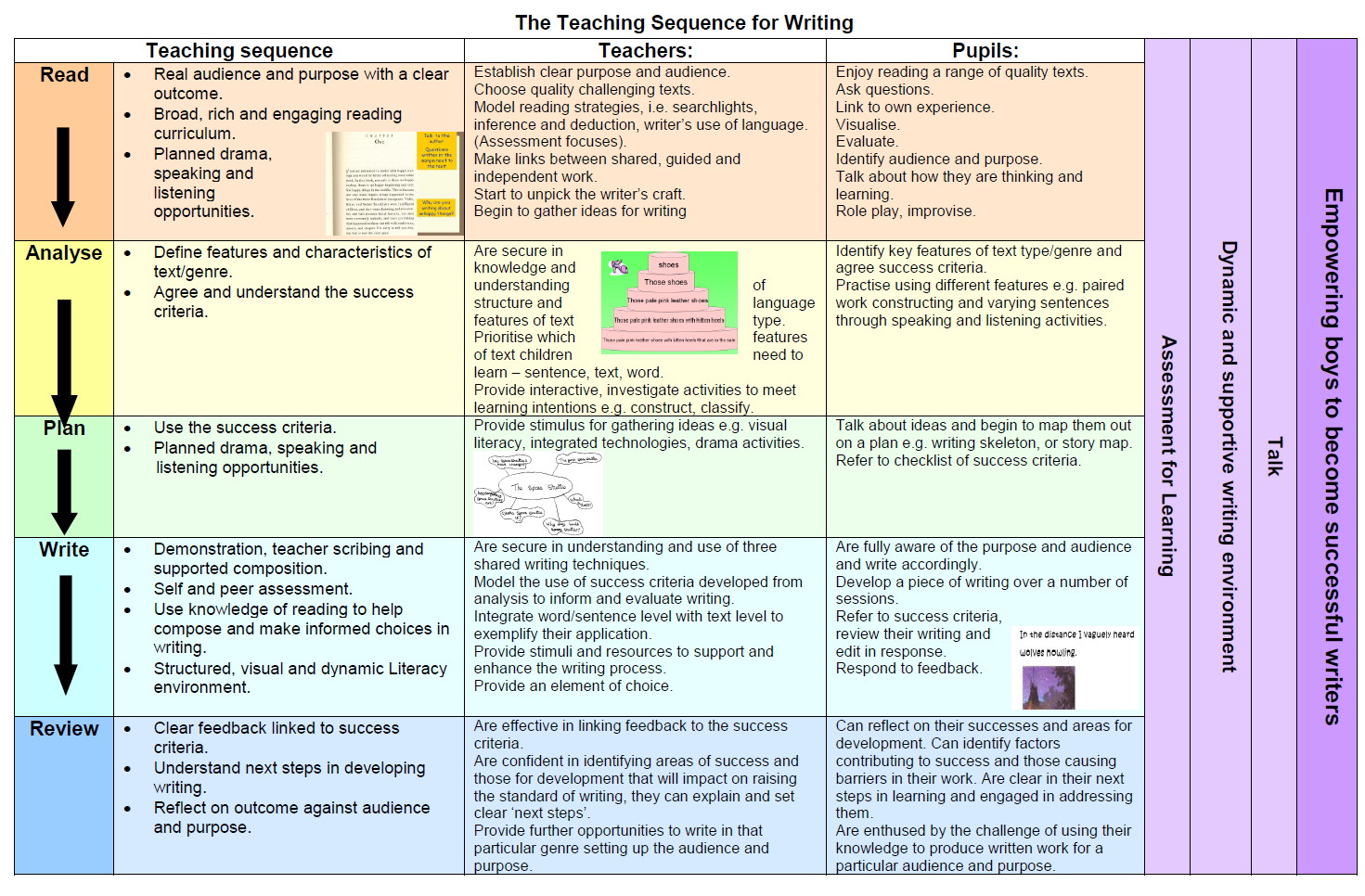
Through the teaching of Bug Club Phonics the children are taught the essential skills needed for spelling by the end of key stage 1. Spelling shed is used from year 2 to ensure children are learning spelling patterns and rules to support them in their writing. Exciting and high quality stimuli are used to create writing. These can be books, short pieces of writing, pictures of music. Often, the stimuli are linked to the wider class topic to support learning in all areas. English learning is based on resources from Hamilton Brookes. Our curriculum is structured so that children experience writing across a range of genres during their time with us. We use the writing sequence of read, analyse, plan, write and review to support the writing process for children. We carefully consider the purpose and audience for writing in order that children engage in writing fully. We plan for writing opportunities across the curriculum as well in English, allowing the children to practice their skills. We use the Letter-join scheme to support children in developing their handwriting skills. We have a whole school 'We are writers' display where we proudly display the work our children produce at least once a term. These are on clipboards and show the child's writing journey over time. Interventions are used to support children where gaps are identified. Vocabulary and grammar are taught within the writing sequence, giving purpose to the teaching. |
Children will develop a love of writing. Children leave St. Margaret's with a good knowledge of writing for a wide range of purposes. They have the skills required to write with confidence and flair. Attainment in writing is measured using the statutory assessments at the end of Key Stage One and Two. These results are measured against the reading attainment of children nationally. However, we firmly believe that writing is a key means of communication and so the impact of our writing curriculum goes beyond the results of the statutory assessments. |